
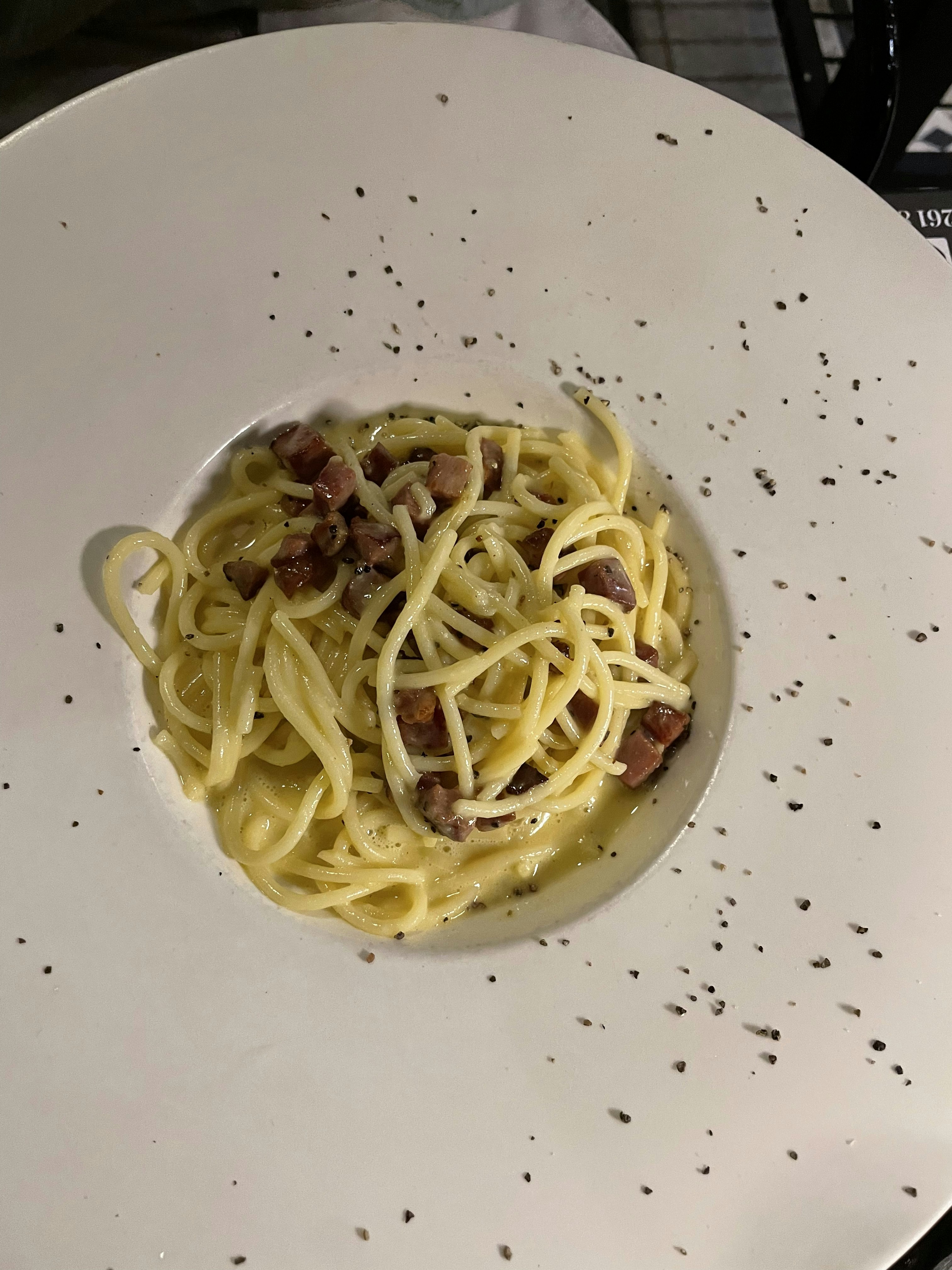
Ingredients for Spaghetti Carbonara
To prepare an authentic Spaghetti Carbonara, it is essential to gather a specific set of ingredients that characterize this classic Italian dish. The primary ingredient is the spaghetti itself, and for serving two people, you will need approximately 200 grams of high-quality dried spaghetti. This pasta serves as the foundation for the meal, and its cooking should be timed so that it is perfectly al dente when combined with the sauce.
The second key component is the pork fat, traditionally guanciale, which brings a rich flavor to the dish. If guanciale is unavailable, pancetta can serve as a suitable substitute. For this recipe, about 100 grams of either guanciale or pancetta will suffice. The meat should be diced into small pieces to allow for even cooking and integration into the pasta.
Another crucial element is the eggs, which provide the creamy texture that characterizes spaghetti carbonara. You will require two large eggs for this recipe, with the temptation to use yolks only for a richer sauce; however, using whole eggs is traditional and yields great results.
Pecorino Romano cheese is the recommended cheese for Spaghetti Carbonara. Approximately 50 grams should be finely grated to enhance the flavor profile. Its salty and tangy notes complement the other ingredients well. Freshly cracked black pepper is also necessary, contributing to the dish’s signature kick; a liberal amount should be added according to preference.
Optional ingredients include garlic or onion, though these are not traditional in a classic carbonara. Some may also add a sprinkle of parsley for garnish. Collecting all these elements will set the stage for creating an authentic and delicious Spaghetti Carbonara that captures the essence of Italian cuisine.
Step-by-Step Cooking Instructions
To prepare an authentic spaghetti carbonara, it is essential to gather all necessary ingredients and tools to streamline the cooking process. Start by collecting high-quality ingredients: 400 grams of spaghetti, 150 grams of guanciale (or pancetta), 100 grams of Pecorino Romano cheese, three large eggs, and freshly cracked black pepper. These elements contribute to the dish’s rich flavor.
First, bring a large pot of salted water to a boil. Once boiling, add the spaghetti and cook according to package instructions until al dente. Stir occasionally to prevent sticking. While the pasta cooks, you can prepare the sauce. In a medium bowl, whisk together the eggs and grated Pecorino Romano cheese until well combined. A pinch of black pepper can enhance the mixture, giving it a delightful zing.
Next, cut the guanciale into small pieces and place it in a large skillet over medium heat. Allow it to render its fat for about 5-7 minutes, stirring occasionally until it becomes crispy and golden brown. This step is crucial because the rendered fat will later be used to create the creamy carbonara sauce without scrambling the eggs.
Once the pasta is al dente, reserve a cup of pasta water and drain the rest. Quickly combine the hot spaghetti with the guanciale in the skillet, ensuring the pasta absorbs the flavorful fat. This is where the magic happens: off the heat, add the egg and cheese mixture, stirring vigorously to create a sauce. The residual heat from the pasta will cook the eggs gently, creating a smooth and creamy texture. If the mixture appears too thick, gradually incorporate reserved pasta water to achieve the desired consistency.
Serve your spaghetti carbonara immediately, garnished with additional Pecorino Romano cheese and a sprinkling of black pepper for an extra kick. By following these precise steps, you can confidently create this classic Italian dish, showcasing your culinary skills and delighting your guests.
Tips for Achieving the Perfect Texture
When preparing an authentic spaghetti carbonara, the texture of the dish is just as important as its flavor. Achieving the ideal consistency requires attention to detail, particularly regarding the ingredients and cooking methods used. To begin with, selecting high-quality ingredients is crucial. Fresh eggs are paramount; the yolks should be vibrant and free of any imperfections. If possible, opt for authentic Italian cheeses like Pecorino Romano or Parmigiano-Reggiano, as they contribute to the flavor profile while enhancing the overall texture of the sauce.
Timing is critical when cooking the pasta. For spaghetti carbonara, the pasta must reach the perfect al dente texture, which typically requires boiling for about 8 to 10 minutes. It is advisable to taste a strand of spaghetti a minute or two before the package instructions suggest it is done. This way, you can ensure the pasta retains its firmness when combined with the sauce. Additionally, remember to reserve some pasta water before draining. The starchy water can be an excellent tool for adjusting the sauce’s consistency and ensuring a smooth blend with the pasta.
The creaminess of the sauce can be manipulated through the careful addition of the reserved pasta water. Start by mixing a small amount, gradually introducing more to reach the desired creaminess without making the sauce too watery. A common pitfall to avoid is adding heavy cream; true carbonara relies solely on the emulsification of eggs and cheese for its rich texture. By following these tips, you can create a spaghetti carbonara that is not only flavorful but also perfectly textured, offering a delightful dining experience that pays homage to traditional Italian cuisine.
Serving Suggestions and Pairings
When it comes to presenting a delightful plate of spaghetti carbonara, garnishing plays a pivotal role in enhancing both flavor and visual appeal. One of the simplest yet most effective ways to elevate your dish is by sprinkling freshly chopped parsley over the top. This not only adds a pop of vibrant color but also lends a fresh herbaceous note that beautifully contrasts with the rich flavors of the carbonara sauce. Additionally, a generous grating of Parmigiano-Reggiano cheese can further amplify the dish’s savory depth while providing a creamy texture that complements the pasta well.
In terms of beverage pairings, a well-selected wine can significantly enhance the dining experience. A light-bodied white wine, such as a Pinot Grigio or a Verdicchio, works wonders in balancing the richness of the dish. These wines’ acidity can cut through the creaminess, refreshing the palate for each bite. Alternatively, a light red wine like Chianti can offer a fruity and earthy flavor profile that complements the umami notes present in the pancetta and cheese. Serving your spaghetti carbonara with the right wine can transform a casual meal into an authentic Italian dining experience.
The choice of tableware is also essential for creating a restaurant-quality presentation at home. Opt for wide, shallow pasta bowls to allow the spaghetti to be elegantly displayed and to provide easy access to the sauce. White or neutral-toned dishes allow the colors of the carbonara to stand out, enhancing the overall aesthetic. Lastly, while the carbonara itself takes center stage, consider offering a side salad or a light vegetable dish, such as a simple arugula salad dressed with olive oil and lemon. This bright accompaniment will contrast with the heaviness of the carbonara, providing a well-rounded meal that showcases the classic Italian dish beautifully.