
Introduction to Red Velvet Cake
Red velvet cake is a remarkably iconic dessert that has earned its place in the hearts and dining tables of many, particularly in American culture. Its unique appearance, characterized by a vibrant red color that contrasts beautifully with its creamy, white frosting, creates a visual appeal that is hard to resist. The origins of red velvet cake can be traced back to the early 20th century, gaining popularity in the 1920s and 1930s, particularly in the southern United States. Although there are several theories regarding its name and the rich red hue, one common explanation is that the color comes from the interaction of cocoa and acidic ingredients like buttermilk or vinegar, lending the cake a distinctive flavor and texture.
The texture of red velvet cake is another appealing feature; it is remarkably soft and fluffy, making each slice melt in the mouth. Traditionally, cake recipes incorporate ingredients such as buttermilk, vegetable oil, and a hint of cocoa powder, balancing moisture and flavor to create a sponge that is both delicious and indulgent. The signature frosting, often made from cream cheese or buttercream, adds a layer of richness and creaminess that elevates the overall experience, ensuring this cake is more than just a dessert; it is a celebration in itself.
Today, red velvet cake continues to be a staple at weddings, birthdays, and various special occasions. It is also embraced by bakers across the nation, who experiment with variations that include cupcakes, cheesecakes, and even cookies. This delightful dessert not only represents a charming slice of American culinary tradition but also embodies the joy and festivity that accompanies celebrations. The fondness people have for red velvet cake is a testament to its enduring appeal and cultural significance, ensuring it remains a favorite indulgence for years to come.
Why This Recipe Works
The classic red velvet cake is a beloved dessert that boasts a unique blend of flavors and textures. At the heart of this recipe are key ingredients such as buttermilk and vinegar, which play a pivotal role in the cake’s tender crumb and moist texture. When combined with baking soda, the acidity of buttermilk and vinegar creates a chemical reaction that produces carbon dioxide. This reaction results in a lighter and fluffier cake, as the gas bubbles form during baking. The balance of acidity and alkalinity not only contributes to the cake’s structure but also enhances the overall flavor profile.
Additionally, red velvet cake is recognized for its distinct color, which is often achieved through the use of cocoa powder and red food coloring. The cocoa powder imparts a subtle chocolate flavor that contrasts beautifully with the sweetness of the cake. While the rich hue visually appeals to the eye, it is the harmonious merger of flavors that truly elevates this dessert. The sweetness of the cake elegantly balances against the tangy notes of the accompanying cream cheese frosting.
The cream cheese frosting is instrumental in defining the taste experience of the red velvet cake. Made with a blend of cream cheese, butter, and powdered sugar, this frosting introduces a tartness that cuts through the sweetness of the cake. This interplay between the rich, tender cake and the tangy, smooth frosting creates a remarkable sensory experience. Together, these elements contribute to the classic red velvet cake’s status as an indulgent dessert that is both satisfying and nuanced. In mastering this recipe, one will not only unlock the secrets behind its appealing texture but also experience distinctive flavor combinations that make it a timeless favorite.
Ingredients You’ll Need
To create a delectable classic red velvet cake, there are several essential ingredients that contribute both to its texture and unique flavor. The following is a comprehensive list of what you’ll need, along with the purpose of each component.
Firstly, all-purpose flour is crucial for providing the structural foundation of the cake. It helps create the desired crumb and consistency. Sifting the flour beforehand can also enhance the cake’s lightness by incorporating air.
Next, granulated sugar plays a key role in sweetness as well as moisture retention, resulting in a moist cake. It also aids in the browning process during baking, contributing to the overall flavor profile.
The incorporation of baking soda and baking powder facilitates leavening. These agents react with acidic components, such as buttermilk, ensuring that the cake rises beautifully. Cocoa powder, though minimal, adds a subtle chocolate flavor and richness complemented by the red dye.
To achieve the signature color, red food coloring is essential. This ingredient is not just for aesthetics; it enhances the overall visual appeal of the cake, making it iconic.
Buttermilk imparts a slight tang that balances the cake’s sweetness and contributes to its soft texture. Additionally, eggs act as a binding agent, helping in the emulsification process, which is vital for uniformity.
Lastly, for the topping, a classic cream cheese frosting requires cream cheese and butter to create a rich, spreadable mixture. The addition of vanilla extract enhances the overall flavor, while powdered sugar sweetens and thickens the frosting.
With these ingredients prepared, you are well-equipped to embark on the delightful journey of baking a classic red velvet cake.
Step-by-Step Instructions
To create a classic red velvet cake, it is essential to follow a structured approach to achieve the perfect balance of flavors and textures. Begin by preheating your oven to 350°F (175°C). Prepare two 9-inch round cake pans by greasing them well and lining the bottom with parchment paper to prevent sticking.
Next, gather your ingredients for the cake batter. In a large mixing bowl, combine 2 ½ cups of all-purpose flour, 1 ½ cups of granulated sugar, 1 teaspoon of baking soda, 1 teaspoon of salt, and 1 teaspoon of cocoa powder. Whisk these dry ingredients together until they are well blended. In a separate bowl, mix 1 cup of vegetable oil, 1 cup of buttermilk (at room temperature), 2 large eggs, 2 tablespoons of red food coloring, 1 teaspoon of vanilla extract, and 1 teaspoon of white vinegar. Stir these wet ingredients until they are fully incorporated.
Gradually, add the wet mixture to the dry ingredients, mixing gently until the batter is smooth and the color is uniform. Take care not to overmix, as this can lead to a dense cake. Once the batter is ready, evenly distribute it into the prepared cake pans, smoothing the tops with a spatula.
Bake the layers in the preheated oven for approximately 25-30 minutes, or until a toothpick inserted into the center comes out clean. After baking, allow the cakes to cool in the pans for about 10 minutes, then carefully transfer them to a wire rack to cool completely.
While the cake layers are cooling, prepare the cream cheese frosting. In a mixing bowl, beat 8 ounces of softened cream cheese and ½ cup of unsalted butter until creamy and well combined. Gradually add 4 cups of powdered sugar and 1 teaspoon of vanilla extract, mixing until smooth and fluffy.
Once the cakes have cooled, frost the top of one layer, then place the second layer on top before frosting the entire cake. Ensure that the frosting is evenly spread for a polished look. Optional garnishes can include red velvet cake crumbs or fresh berries to enhance both presentation and flavor.
Cooling and Frosting the Cake
Once the red velvet cake layers have finished baking, the cooling process is crucial. It is essential to allow the layers to cool in their pans for about 10 to 15 minutes. This initial cooling time helps the cakes slightly firm up, making it easier to remove them without breaking. After this period, gently invert the pans onto wire racks. If necessary, you can use a butter knife to loosen the edges of the cake before tipping them out. Place the layers on the racks and allow them to cool completely, ideally for at least one hour. Cooling the cakes thoroughly ensures that they do not become soggy, which can happen if they are frosted while still warm.
When the cake layers are completely cool, it’s time to prepare for frosting. An ideal frosting for a classic red velvet cake is cream cheese frosting, which enhances its flavor and complements the cake’s rich texture. Before starting, make sure the frosting has reached room temperature for easy spreading. To create a clean and smooth finish, use an offset spatula or a bench scraper and apply a thin layer of frosting, known as a crumb coat, to seal in any loose crumbs. Chill the cake for about 30 minutes after this initial layer to set the frosting.
Once the crumb coat has set, you can move on to applying the final layer of frosting. Be generous with the frosting, ensuring an even distribution across the top and sides. For a decorative touch, consider using decorative swirls or peaks. To create these, use the spatula to gently create curves and patterns in the frosting. The goal is to achieve an aesthetically pleasing presentation that highlights the beautiful red color of the cake. The final presentation should capture the essence of this indulgent dessert, making it the centerpiece of any celebration.
Serving and Pairing Suggestions
When it comes to presenting a classic red velvet cake, the possibilities for serving and garnishing are vast and inviting. This delectable dessert not only boasts a rich color but also a unique flavor profile that can be enhanced through thoughtful serving methods. To elevate your red velvet cake, consider adding a dollop of cream cheese frosting on top, which is a traditional pairing. For an artistic touch, you might sprinkle chocolate shavings or finely chopped nuts around the base of the cake, creating an aesthetically pleasing presentation. Additionally, a garnish of fresh berries, such as raspberries or strawberries, can add a vibrant contrast to the deep crimson of the cake while also bringing a burst of freshness that balances the richness of the flavors.
As for beverage pairings, a classic red velvet cake pairs beautifully with a variety of drinks that complement its sweetness and texture. Coffee is a wonderful option, whether you prefer it plain or flavored with a dash of vanilla or mocha. The slight bitterness of coffee can cut through the cake’s richness, making each bite even more enjoyable. Alternatively, if you are looking for something more indulgent, dessert wines such as Port or a sweet Riesling can enhance the overall experience. The fruity notes and sweetness of these wines harmonize well with the cake’s flavor, adding an extra layer of sophistication.
For a family-friendly touch, consider serving the cake alongside milk or a rich hot chocolate, especially if it’s being enjoyed during cooler seasons. The creamy texture of these beverages complements the cake, providing a well-rounded taste experience. Overall, the joy of serving classic red velvet cake lies in its versatility; mixing and matching different garnishments and drink options can elevate both taste and presentation, making it a centerpiece perfect for any occasion.
Tips for the Perfect Red Velvet Cake
Creating the perfect red velvet cake involves a combination of carefully selected ingredients, precise measurements, and specific baking techniques. To begin with, the choice of cocoa powder is crucial; opt for high-quality unsweetened cocoa powder to achieve a rich flavor without overpowering the distinctiveness of the red velvet base. Additionally, using buttermilk instead of regular milk will contribute to the cake’s moistness and enhance its slight tang, which is an essential characteristic of red velvet cake.
When it comes to food coloring, a common choice is liquid red food coloring, though gel food coloring is often recommended as it provides a more vibrant hue without adding extra liquid to the batter. For a more natural approach, one may consider beet juice or other plant-based colorants. However, achieving the classic red velvet look may be more challenging with these alternatives. Another critical tip is to ensure that your baking soda and vinegar are fresh; these ingredients work in tandem to create the desired leavening effect and contribute to the cake’s signature texture.
Baking time is essential for a perfect red velvet cake. It is advisable to check for doneness a few minutes before the recommend time to prevent overbaking, which can lead to a dry cake. Always use the toothpick test; if it comes out clean or with a few moist crumbs, your cake is ready. Allowing the cake to cool in the pan for a short period before transferring it to a wire rack is another crucial step—this prevents breakage and helps maintain structural integrity.
Lastly, consider the frosting—traditional cream cheese frosting pairs beautifully with red velvet cake. Be sure to properly chill the frosting before applying it to the cake for easier spreading. Following these tips will greatly enhance your chances of crafting a beautiful and delicious red velvet cake that impresses friends and family alike.
Image Highlights of the Red Velvet Cake
The classic red velvet cake is not only known for its exquisite taste but also for its stunning visual appeal. The first image showcases an overhead shot of the entire cake, revealing its iconic deep red hue that captures the essence of this beloved dessert. The decorative swirls of cream cheese frosting elegantly drape over the top and sides of the cake, enhancing its visual allure. This rich contrast between the vibrant crimson and the creamy white creates a striking effect that invites one to indulge in a slice. The soft texture of the layers is implied through the gentle curves of the frosting, beckoning dessert enthusiasts to appreciate the craftsmanship involved in its preparation.
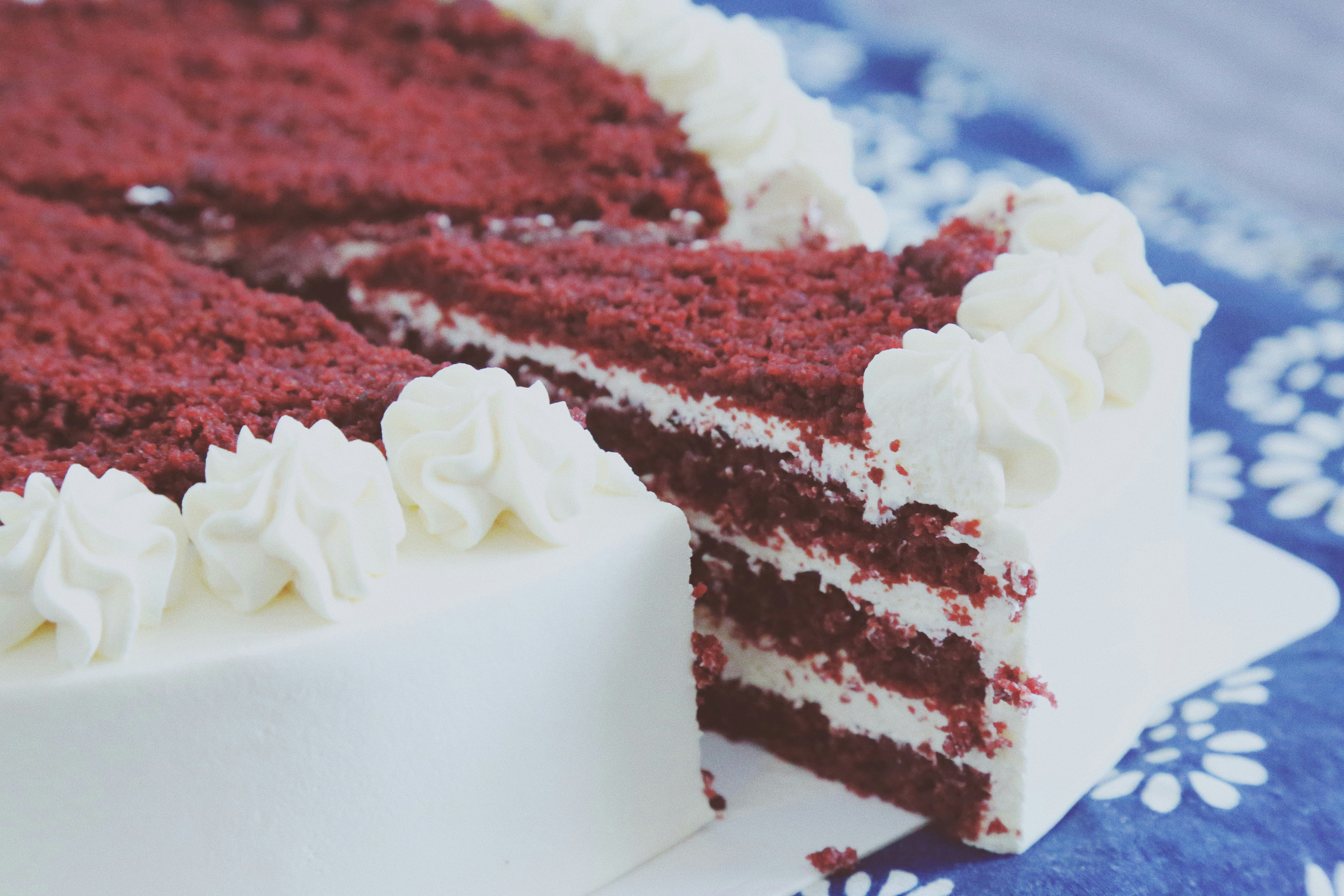
The second image focuses closely on a single slice of the red velvet cake, allowing us to examine the layers of this dessert more intimately. The beautifully moist layers are visible, with each slice revealing the sumptuous red color interspersed with the creamy frosting between the layers. This close-up not only highlights the cake’s rich texture but also emphasizes the generous amount of thick frosting adorning the slice. The gleaming finish of the frosting catches the light, adding a tantalizing appeal that makes the cake appear even more irresistible. The images together evoke a sense of warmth and hospitality, positioning the red velvet cake as a centerpiece for gatherings and celebrations.
These captivating visuals serve as an invitation to not just imagine but also to experience the decadent flavor profile of a classic red velvet cake. When seen through these images, it becomes clear why this dessert holds a special place in American culinary traditions. The blend of texture, color, and design makes red velvet cake not just a treat for the taste buds but also a feast for the eyes.
Conclusion
In conclusion, baking a classic red velvet cake brings joy not only through the process itself but also through the delight it offers when shared with others. This dessert, characterized by its rich and velvety texture, accompanied by a distinctive cream cheese frosting, is a true culinary gem. It carries a significant place in American tradition, embodying the essence of celebrations and gatherings. By choosing to bake this cake, you are not only preparing a treat but also participating in a time-honored custom that has been enjoyed by countless generations.
The satisfaction derived from creating a red velvet cake at home is unparalleled. As you mix the ingredients, watch the batter transform into a beautifully vibrant cake, and finally enjoy a slice, you will find that each bite is steeped in both flavor and history. Whether it’s for a birthday, holiday, or simply a personal indulgence, making this dessert is an experience worth every moment.
<ptherefore, a="" adventures.