
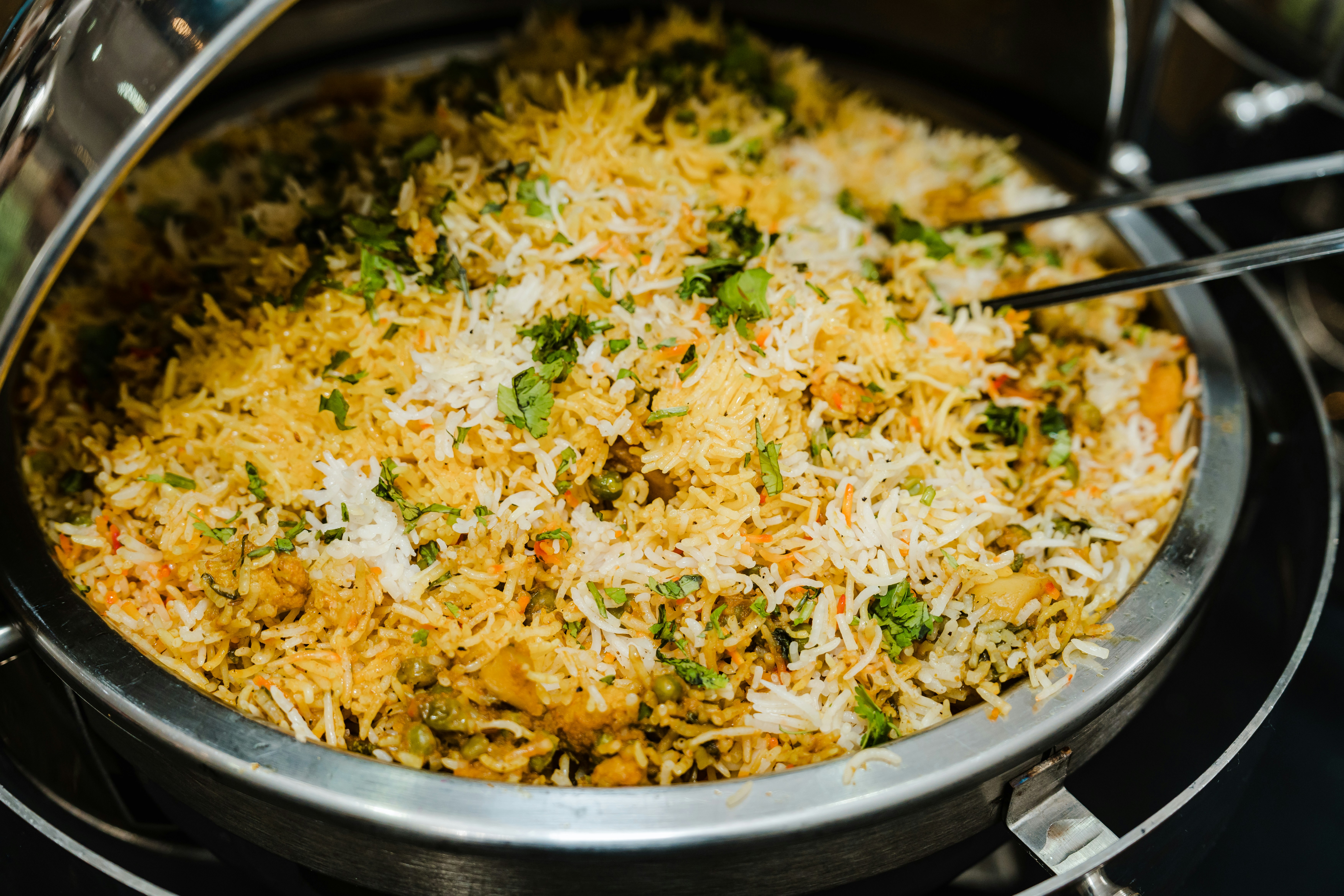
Introduction to Vegetable Biryani
Vegetable biryani is a vibrant and flavorful dish that has captured the hearts of food enthusiasts across the globe. Originating from the Indian subcontinent, this iconic dish exemplifies the rich culinary heritage of South Asian cuisine. Biryani itself is believed to have been brought to the region by Persian travelers and merchants, and over time, it has evolved into numerous regional variations, each showcasing a distinct blend of spices, ingredients, and cooking techniques.
At its core, vegetable biryani is a harmonious amalgamation of rice, assorted vegetables, and an array of aromatic spices. This dish is not only a feast for the senses but also holds a significant place in various cultural celebrations, gatherings, and daily meals. The preparation of biryani often involves a meticulous layering process, where partially cooked rice is combined with seasoned vegetables and then steamed together to allow the flavors to meld beautifully.
What makes vegetable biryani particularly appealing is its versatility. It can be easily customized to suit individual tastes, catering to both vegetarians and non-vegetarians alike. The bounty of vegetables used in biryani, such as carrots, peas, and bell peppers, not only adds color and texture but also enhances the nutritional profile of the dish. Furthermore, the fragrant spices, including cumin, cardamom, and saffron, create a delightful aroma that elevates the dining experience.
This popular dish has transcended geographical boundaries and has become a beloved choice in restaurants and homes across the world. Whether served at festive occasions or enjoyed as a comforting weeknight meal, vegetable biryani is a celebration of flavors and ingredients that embodies the essence of convivial eating. Ultimately, it invites you to explore the joys of cooking and brings people together around the table, making it a perfect addition to your culinary repertoire.
Ingredients Needed for Vegetable Biryani
To create a delightful vegetable biryani, a careful selection of ingredients is essential. The following is a categorized list of what you will need, which includes both essential and optional ingredients. This guidance will help you prepare the dish with confidence while ensuring you have the right components for a flavorful outcome.
Essential Ingredients
1. Rice: Basmati rice is the preferred choice for biryani due to its long grains and fragrant aroma. Ensure to soak it for at least 30 minutes before cooking to achieve the desired texture.
2. Vegetables: A variety of vegetables can be used. Common options include carrots, peas, potatoes, and bell peppers. Use a combination for a colorful and nutritious dish.
3. Spices: Key spices for flavoring include cumin seeds, bay leaves, cloves, cardamom, and cinnamon. Additionally, turmeric powder and red chili powder will elevate the taste and color of the biryani.
4. Onions and Garlic: Sliced onions and minced garlic add a depth of flavor; they can be fried until golden for added sweetness and crunch.
5. Yogurt: Plain yogurt provides creaminess to the biryani and helps to marinate the vegetables, enhancing the overall flavor profile.
Optional Ingredients
1. Herbs: Fresh cilantro and mint leaves can be added for garnish, contributing an aromatic freshness that complements the dish.
2. Cashews and Raisins: For a touch of sweetness and crunch, consider adding fried cashews and raisins. These ingredients are often included in traditional recipes but can be omitted based on preference.
3. Ghee: While oil is commonly used, ghee (clarified butter) can replace it for a richer taste.
For any ingredients that may not be available, substitutions can often be found. For instance, if basmati rice is unavailable, alternative long-grain varieties can suffice, though they may alter the final texture. By understanding the necessary components, one can confidently embark on their culinary journey to prepare vegetable biryani.
Step-by-Step Cooking Instructions
To prepare a delicious homemade vegetable biryani, start by gathering all the necessary ingredients. You will require basmati rice, assorted vegetables such as carrots, peas, and potatoes, various spices including cumin seeds, cardamom, cloves, and bay leaves, as well as oil or ghee for cooking. A thorough preparation is essential in ensuring that the cooking process flows smoothly.
First, rinse the basmati rice under cool running water until the water runs clear. This process removes excess starch, preventing the rice from becoming gummy during cooking. After rinsing, soak the rice in water for at least 30 minutes. Soaking enhances the texture and allows for even cooking, resulting in perfectly fluffy grains of rice.
While the rice is soaking, chop the vegetables into bite-sized pieces. Ensure the pieces are uniform in size to promote even cooking. For the spice mix, heat a pan over medium heat and add a tablespoon of oil or ghee. Once hot, add whole spices such as cumin seeds, cardamom pods, and cloves. Sauté them briefly to release their essential oils, which will impart a fragrant aroma to your biryani.
Next, add the chopped vegetables to the pan. Stir-fry them for several minutes until they begin to soften. This step is critical, as it helps to develop deeper flavors in the dish. Carefully integrate the soaked, drained rice into the vegetable mixture, and gently fold to combine without breaking the rice grains.
Now, it is time to add liquid. Pour in double the volume of water relative to the soaked rice. Season the mixture with salt to taste and bring it to a gentle boil. Once boiling, reduce the heat to low, cover the pan tightly with a lid, and allow it to simmer for about 20 minutes. Avoid lifting the lid, as this can disturb the cooking process. After 20 minutes, take the pan off the heat and let it rest for an additional 10 minutes before serving.
Serving Suggestions and Tips for Perfecting Biryani
To fully appreciate the delightful complexity of homemade vegetable biryani, one must consider complementary dishes that enhance the overall dining experience. A popular accompaniment is raita, a refreshing yogurt sauce that balances the spiciness of the biryani. Simple to prepare, raita can be made by mixing plain yogurt with chopped cucumber, mint, and a pinch of ground cumin, creating a cool side dish that mitigates heat and enriches flavors. Additionally, a fresh salad featuring diced tomatoes, cucumbers, and onions dressed in lime juice can add a vibrant touch and further elevate the meal.
When it comes to presentation, garnishing plays a crucial role. Toasted cashews or slivered almonds can add a delightful crunch, while fried onions provide a savory, aromatic finish. A scattering of fresh cilantro or mint not only enhances the visual appeal but also infuses a fresh herbaceous note that complements the spices in the biryani beautifully. For those who enjoy a touch of sweetness, consider adding pomegranate seeds for a burst of color and flavor.
Storage is another important aspect when it comes to enjoying vegetable biryani beyond the meal. This dish can be stored in an airtight container in the refrigerator for up to three days, making it an excellent option for meal prep. Reheating is simple; just add a splash of water to prevent drying out and heat gently on the stove or in the microwave. For those looking to keep their biryani fresher for an extended period, freezing is an option as well. Just allow the biryani to cool completely before transferring it to freezer-safe containers, and it can last up to three months.
By incorporating these serving suggestions and storage tips, you can make the most out of your homemade vegetable biryani, ensuring it remains a delightful and satisfying meal, whether enjoyed fresh or as leftovers.