
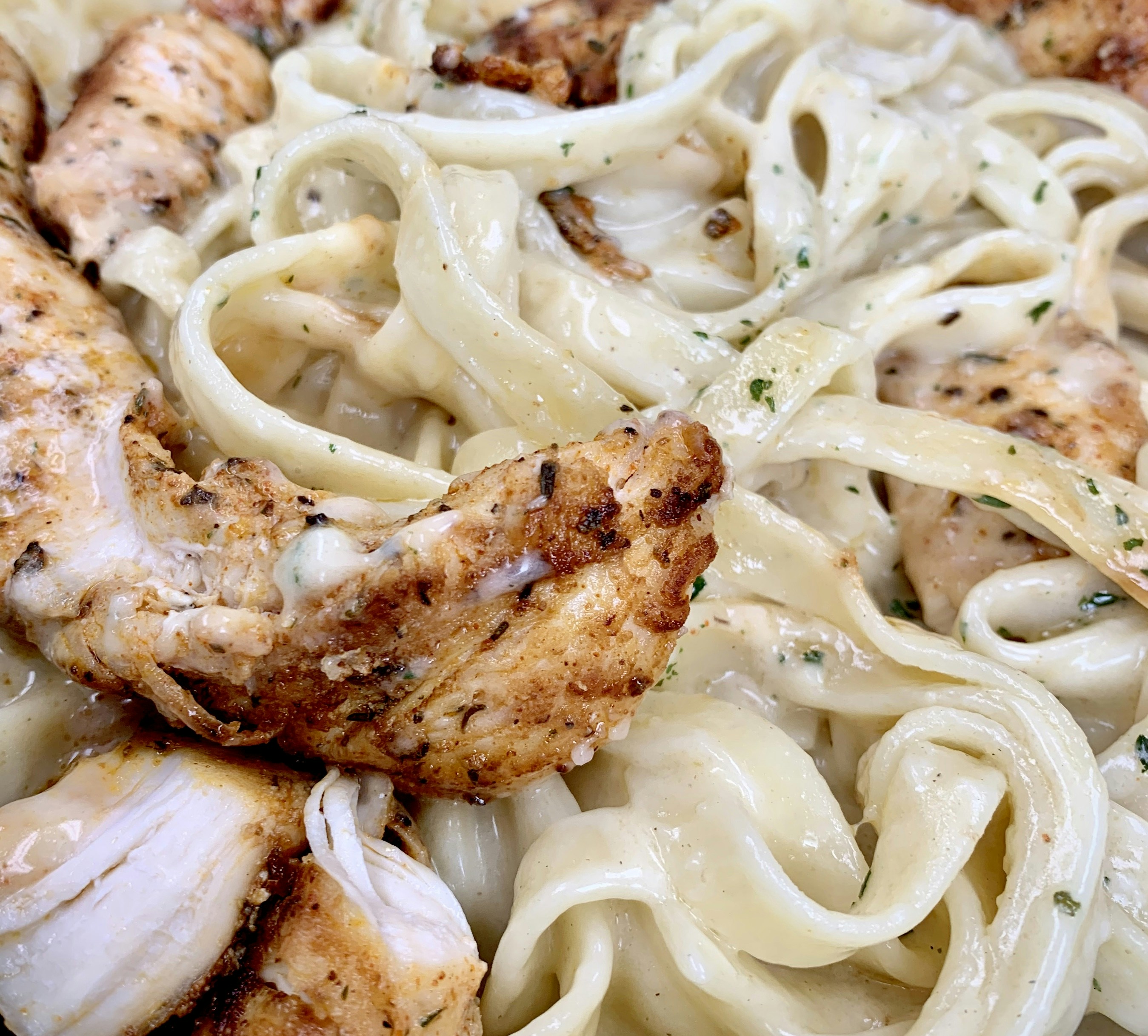
Introduction to Chicken Alfredo Pasta
Chicken Alfredo Pasta has become a beloved dish enjoyed by many due to its creamy texture and rich, savory flavors. This dish, which traditionally features fettuccine noodles coated in a sauce made from butter, heavy cream, and Parmesan cheese, creates a decadent yet comforting experience. Its blend of ingredients results in a luscious coating that adheres beautifully to the pasta, making each bite satisfying. Additionally, the inclusion of tender chicken adds protein, enhancing the dish’s heartiness and appeal.
As a quintessential comfort food, Chicken Alfredo Pasta is renowned for its versatility. It effortlessly transitions from a casual weeknight dinner to an elegant meal suitable for special occasions. The process of preparing this recipe is straightforward, making it accessible for home cooks, regardless of their culinary expertise. This quality makes it particularly ideal for busy families seeking a quick, delicious dinner option that does not compromise on flavor or satisfaction. One can effortlessly whip up this dish in under 30 minutes, allowing for hassle-free preparation even on the most hectic days.
Furthermore, the popularity of Chicken Alfredo Pasta can be attributed to its ability to cater to various tastes. With the basic recipe serving as a canvas, it lends itself beautifully to experimentation. Whether it’s adding vegetables for a healthier twist or incorporating different seasonings for a spice boost, the variations are limitless. This adaptability ensures that Chicken Alfredo remains a favorite among diverse palates, solidifying its status as a staple in households and restaurants alike. The comforting nature of this dish continues to endear it to generations, making it a timeless classic in the world of culinary delights.
Ingredients You Will Need
To prepare a delightful Chicken Alfredo Pasta that serves four people, it is essential to have a precise selection of ingredients. Each component contributes to the rich flavor and overall quality of the dish.
Starting with the pasta, you will need 12 ounces of fettuccine. This type of pasta is ideal for absorbing the creamy alfredo sauce, creating a satisfying and delicious experience.
Next, for the chicken portion, you will require two boneless, skinless chicken breasts, weighing approximately one pound in total. Cutting the chicken into bite-sized pieces allows for even cooking and easier incorporation into the pasta.
The heart of this recipe lies in the alfredo sauce. To create the sauce, gather the following ingredients: 1 cup of heavy cream, 1 cup of freshly grated Parmesan cheese, and ½ cup of unsalted butter. The butter enhances flavor, while the cream and cheese work together to create a creamy and luxurious sauce.
Additionally, you should have some seasonings on hand. Consider using 2 cloves of garlic, minced, for an aromatic kick, and a pinch of salt and freshly ground black pepper to taste. These elements will elevate the flavor profile of the dish significantly.
Lastly, for garnishing, have some fresh parsley available – about ¼ cup, chopped. This not only adds a pop of color but also contributes subtle herbal notes that complement the richness of the alfredo sauce.
With these ingredients gathered, you will be well on your way to creating a delicious, homemade Chicken Alfredo Pasta that is sure to impress your family and friends.
Step-by-Step Cooking Instructions
To create an irresistibly delicious chicken alfredo pasta, begin by gathering all the necessary ingredients: pasta of your choice, boneless chicken breasts, heavy cream, garlic, parmesan cheese, and butter. Ensuring that you have everything ready will streamline the cooking process.
First, fill a large pot with water and bring it to a rolling boil. Add a generous amount of salt to the water; this not only enhances the flavor of the pasta but also elevates the overall essence of the dish. Once the water is boiled, add your chosen pasta and cook according to the package instructions until you reach the al dente stage. This usually takes around 8 to 12 minutes. Once done, reserve about a cup of pasta water for later use and drain the remainder.
While the pasta is boiling, turn your attention to the chicken. Season the boneless chicken breasts with salt and pepper. In a large skillet, melt two tablespoons of butter over medium heat. Once melted, add the chicken breasts and cook for approximately 6-7 minutes on each side, or until they reach a golden-brown color and are cooked through. Remove the chicken from the skillet and allow it to rest for a few minutes before slicing into strips.
Now, it’s time to create the creamy alfredo sauce. In the same skillet where you cooked the chicken, add a couple of cloves of minced garlic and sauté for about 1 minute until fragrant. Then, pour in the heavy cream, allowing it to simmer gently. Gradually stir in the freshly grated parmesan cheese until the cheese melts smoothly into the cream, creating a rich and velvety sauce. If the sauce is too thick, you can add some of the reserved pasta water to achieve your desired consistency.
Finally, combine the cooked pasta, sliced chicken, and alfredo sauce in the skillet. Toss everything together to ensure the pasta is well-coated with the creamy sauce. This step is crucial for an indulgent flavor profile. Serve the chicken alfredo pasta hot, garnished with additional parmesan cheese and freshly cracked black pepper for an appealing presentation.
Cooking Tips for Perfect Alfredo
Creating a delightful Chicken Alfredo pasta requires not only the right ingredients but also careful attention to cooking techniques. One of the most crucial tips for achieving an authentic Alfredo sauce is to utilize fresh Parmesan cheese. Although pre-grated Parmesan can save time, it often contains anti-caking agents that prevent it from melting smoothly. For the best results, opt for freshly grated Parmigiano-Reggiano, as its rich flavor and superior melting qualities will elevate your sauce to the next level.
Another important aspect to consider when preparing your Chicken Alfredo is cooking the chicken properly. To ensure the chicken remains tender and juicy, avoid overcooking it. Whether you are grilling, pan-frying, or baking, aim for an internal temperature of 165°F (74°C) and allow the chicken to rest before slicing. This precaution will not only yield a moist protein but also enhance the overall texture of your dish.
Adjusting the consistency of the Alfredo sauce can make a significant difference in the final presentation and flavor. As you prepare your recipe, reserve a small cup of pasta cooking water before draining the pasta. This starchy water can be gradually added to the sauce if it becomes too thick, creating a silky and smooth texture. By incorporating this technique, you will achieve the perfect balance between sauce and pasta, ensuring each bite is enveloped in flavor.
Finally, don’t hesitate to customize your Chicken Alfredo pasta with additional ingredients such as sautéed garlic, fresh herbs, or a hint of nutmeg, which can complement the existing flavors beautifully. By following these cooking tips, you will be well on your way to mastering an irresistible Chicken Alfredo pasta that is sure to impress your guests and satisfy your cravings.
Serving Suggestions
When it comes to elevating your chicken Alfredo pasta, the right accompaniments can enhance both its flavor and nutritional value. One classic pairing is garlic bread, which complements the creamy sauce remarkably well. The crispy texture of garlic bread contrasts beautifully with the tender pasta, making each mouthful more enjoyable. To prepare, simply spread a mixture of butter, minced garlic, and parsley on slices of baguette or Italian bread, then toast them in the oven until golden. This serving suggestion is not only easy to prepare but also a crowd-pleaser.
Incorporating a fresh salad with the meal can also provide a refreshing balance to the richness of the dish. Consider a simple arugula and cherry tomato salad tossed in a light vinaigrette. The peppery arugula adds depth while the tomatoes offer a burst of acidity that cuts through the creamy Alfredo sauce. Alternatively, a Caesar salad enhances the meal with its crisp romaine, crunchy croutons, and parmesan cheese, offering textures that complement the pasta.
For those looking to boost the nutritional profile of their chicken Alfredo pasta, adding vegetables is an excellent option. Steamed broccoli and sautéed spinach are popular choices that not only bring vibrant color to the plate but also provide essential vitamins and minerals. Broccoli can be steamed to retain its crunch, while spinach can be quickly sautéed with garlic to impart a robust flavor. These additions create a harmonious blend, providing a well-rounded meal that is delightful and visually appealing.
Ultimately, these serving suggestions help make your homemade chicken Alfredo pasta an even more enjoyable experience, transforming it into a complete and satisfying meal fit for any occasion.
Nutritional Profile of Chicken Alfredo Pasta
When enjoying a serving of chicken alfredo pasta, it is important to understand the nutrition it provides. A typical serving, usually classified as 1 cup, generally contains approximately 400 to 600 calories. The exact calorie count can vary based on the specific ingredients and preparation methods used in the recipe. Macros play a crucial role in assessing the overall nutritional value of the dish. A standard serving can contain around 25-30 grams of protein, primarily sourced from the chicken, which is essential for muscle maintenance and repair.
In terms of carbohydrates, chicken alfredo pasta typically provides about 40-50 grams per serving. These carbohydrates largely derive from the pasta itself, offering a good source of energy. However, it also includes a modest amount of dietary fiber, primarily depending on the type of pasta used—whole grain pasta will offer higher fiber content than refined options. The fat content in this meal can range from 18-25 grams, mainly coming from the heavy cream and cheese used to create the rich alfredo sauce.
It is also important to consider potential allergens. Traditional recipes for chicken alfredo typically use ingredients such as dairy (cream, cheese), gluten (pasta), and chicken, which may pose allergenic risks to some individuals. Those with lactose intolerance may find this dish challenging, although substituting with lactose-free cream or cheese can often be a suitable alternative. For individuals following a gluten-free diet, using gluten-free pasta options could allow for an enjoyable experience without the health risks associated with gluten consumption.
Overall, chicken alfredo pasta is a savory and satisfying dish that can be part of a balanced diet when enjoyed in moderation, while also noting individual nutritional needs and dietary restrictions.
Common Variations of Chicken Alfredo Pasta
Chicken Alfredo Pasta is a cherished dish known for its creamy sauce and tender chicken. However, variations of this classic recipe allow for creativity and personalization, catering to diverse palates and dietary preferences. One common variation involves changing the type of pasta used. While fettuccine is traditionally preferred, alternatives such as penne, farfalle, or even whole wheat pasta can provide different textures and flavors that complement the rich Alfredo sauce.
Another popular modification incorporates seafood into the dish. Adding shrimp or scallops can enhance the recipe, introducing a delicate flavor profile that pairs well with the creamy sauce. This variation not only adds protein but also offers a delightful contrast of textures, making the dish more intricate and enjoyable. Additionally, for those seeking a lighter option, substituting chicken with grilled salmon can create a unique twist, bringing a smoky richness to the plate.
Vegetable lovers can also benefit from variations of the Chicken Alfredo recipe by introducing an array of seasonal vegetables. Ingredients such as sautéed spinach, broccoli florets, or roasted bell peppers can add color, texture, and nutrition. These vegetables not only enhance the meal’s visual appeal but also balance the richness of the Alfredo sauce, creating a harmonious blend of flavors.
Moreover, incorporating herbs and spices can elevate the dish, introducing an aromatic element that takes it beyond the basic recipe. Fresh basil, parsley, or a hint of nutmeg can infuse the dish with refreshing undertones, making it more exciting for the palate. In conclusion, these variations of Chicken Alfredo Pasta demonstrate that while the classic recipe is delightful on its own, there are numerous adaptations that can cater to personal tastes and dietary needs, ensuring that this beloved dish remains irresistible.
Storage and Reheating Instructions
Proper storage of your homemade chicken Alfredo pasta is essential to maintaining its exquisite flavors and creamy texture. To begin with, ensure that the dish has cooled to room temperature before placing it in the refrigerator. For best results, transfer the pasta into an airtight container. This method prevents moisture loss and keeps the dish fresh for up to three to four days. If you plan to enjoy it later, consider portioning it into smaller containers, which makes it easier to reheat just the amount you need.
If you have a larger batch of chicken Alfredo pasta that you want to store for an extended period, freezing is an option. Place the cooled pasta in a freezer-safe container or heavy-duty freezer bag. Make sure to expel as much air as possible before sealing to avoid freezer burn. This dish can typically be frozen for up to two months without losing its quality. When you are ready to enjoy the pasta, simply let it thaw in the refrigerator overnight before reheating.
Reheating your chicken Alfredo pasta requires a gentle approach to preserve its creaminess. A stovetop method often proves effective; simply place the leftovers in a skillet over low heat. Adding a splash of milk or heavy cream not only helps in restoring the desired texture but also enhances the dish’s creaminess. Stir gently and frequently until it is heated through. Alternatively, you can use a microwave for reheating; cover the container with a microwave-safe lid or a damp paper towel to prevent drying out. Heat in short intervals, stirring in between, to ensure an even warm-up. Following these instructions will allow you to savor your homemade chicken Alfredo pasta as if it were freshly made.
SEO Keywords and Image Generation
In the contemporary digital landscape, effectively utilizing SEO keywords is vital for reaching a broader audience, particularly for recipes like chicken Alfredo pasta. Keywords serve as the guiding terms that potential readers may enter into search engines to discover recipes. Identifying and integrating keywords specific to this delicious dish can significantly enhance its visibility. Important keywords may include “chicken Alfredo recipe,” “creamy pasta dish,” or “Italian chicken pasta.” Using these variations naturally throughout your content not only improves SEO performance but also provides readers with related terms that may pique their interest.
Furthermore, generating a high-quality image of chicken Alfredo pasta is essential for engaging viewers on visual platforms such as Pinterest, where food photography often attracts significant attention. A captivating image can effectively draw audiences in and enhance shares and interactions. To achieve this, consider the following requirements: use natural lighting to bring out the rich colors of the dish, ensure the presentation is appealing by garnishing with herbs such as parsley or basil, and utilize an aesthetically pleasing plate or bowl that complements the meal. The angle of the shot is also crucial; capturing the pasta from a slightly elevated viewpoint can showcase the creamy texture and abundant toppings beautifully.
Lastly, incorporating both the right keywords and stunning imagery will create an irresistible package that not only drives traffic to your recipe but also encourages readers to try making the mouthwatering chicken Alfredo pasta at home. This combination of quality content and striking visuals is key to optimizing your recipe for maximum engagement and discoverability online.